Kevin Clark, Los Angeles, Ca. Jan 25th, 2025
Digital Twinning the Lost and Unknown Culture of Black Altadena.
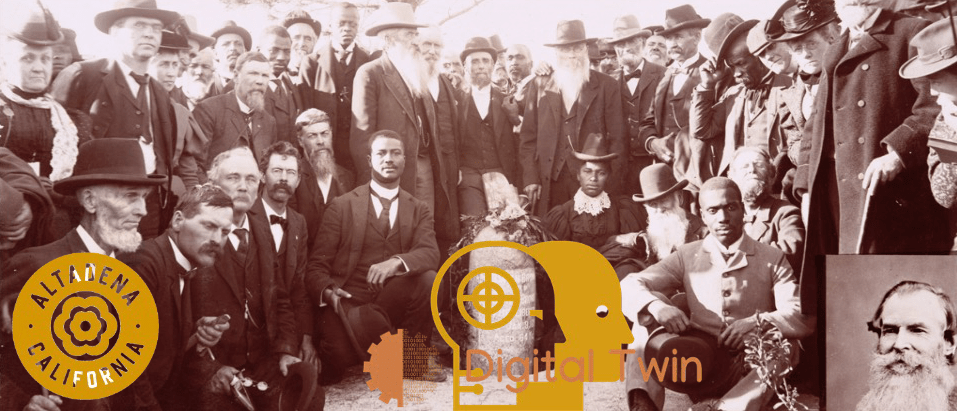
The concept and process of creating a digital twin to preserve and revive the lost culture of Black Altadena, a community profoundly impacted by the Eaton fires and systemic erasure. Central to this initiative is the culture created by Oren Brown, son of abolitionist John Brown, and the untold stories of homeowners whose heirlooms and homes once embodied the heart and soul of the region.
By leveraging advanced 3D modeling, data analysis, and immersive technologies, this project seeks to digitally reconstruct the historical and cultural essence of Black Altadena, offering a virtual window into its legacy.
Key Objectives
- Preserving Lost Heritage:
- Digitally reconstruct key buildings, artifacts, and the community layout of Black Altadena.
- Archive the oral histories, photographs, and heirlooms of residents, creating a repository of the region’s cultural and historical wealth.
- Data Integration:
- Compile historical maps, photographs, archaeological findings, written records, and oral histories.
- Partner with community elders to document their experiences, memories, and any surviving artifacts, ensuring that the digital twin reflects the community’s lived reality.
- Immersive Experiences:
- Utilize virtual reality (VR) and augmented reality (AR) platforms to allow users to explore the reconstructed community interactively.
- Design an educational module within the VR experience to inform users about the historical significance of Black Altadena and the Eaton fires’ impact.
Benefits
- Education and Awareness:
- Serve as an accessible learning tool for schools, universities, and the general public, raising awareness about the history and contributions of Black Altadena.
- Preservation and Restoration:
- Provide historians and archaeologists with a detailed model to inform restoration or commemorative efforts for the community.
- Cultural Revitalization:
- Reconnect current generations of the community with their heritage and inspire collective efforts to preserve and celebrate their legacy.
Methodology
- Data Collection:
- Conduct interviews with the eldest members of the community to capture oral histories and document memories.
- Gather surviving photographs, heirlooms, and other artifacts from the community.
- Analyze historical maps and records to piece together the physical and cultural landscape of Black Altadena.
- Digital Reconstruction:
- Develop 3D models of homes, landmarks, and streets based on collected data.
- Incorporate historical and cultural details to ensure accuracy and authenticity.
- Immersive Platform Development:
- Use VR and AR technologies to create an interactive platform for exploring the digital twin.
- Include features like guided tours, historical narratives, and artifact showcases.
Challenges
- Data Limitations:
- Many historical records and artifacts may be incomplete or lost, requiring careful extrapolation and expert input.
- Interpretation and Accuracy:
- Reconstructing cultural nuances based on limited information will necessitate collaboration with historians, archaeologists, and community members.
- Technical Complexity:
- Developing high-quality digital twins involves advanced 3D modeling, significant computational resources, and skilled technical expertise.
Examples of Digital Twinning Success
- Ancient Cities:
- The digital reconstruction of Pompeii enables visitors to virtually walk its streets and explore its buildings, providing insights into ancient Roman life.
- Indigenous Communities:
- Digitally preserving traditional villages displaced by urbanization to safeguard their architectural and cultural heritage.
- Destroyed Monuments:
- Recreating landmarks destroyed by natural disasters or conflict, allowing future generations to appreciate their historical significance.
Conclusion
Digital twinning offers a groundbreaking approach to preserving and celebrating the lost culture of Black Altadena. By digitally reconstructing its historical and cultural landscape, this project not only honors the legacy of Oren Brown and the broader community but also provides a powerful educational and cultural tool for generations to come. Through collaboration with community members, historians, and technologists, we can ensure that the rich history of Black Altadena lives on in a meaningful and accessible way.
 Site Title
Leave a comment