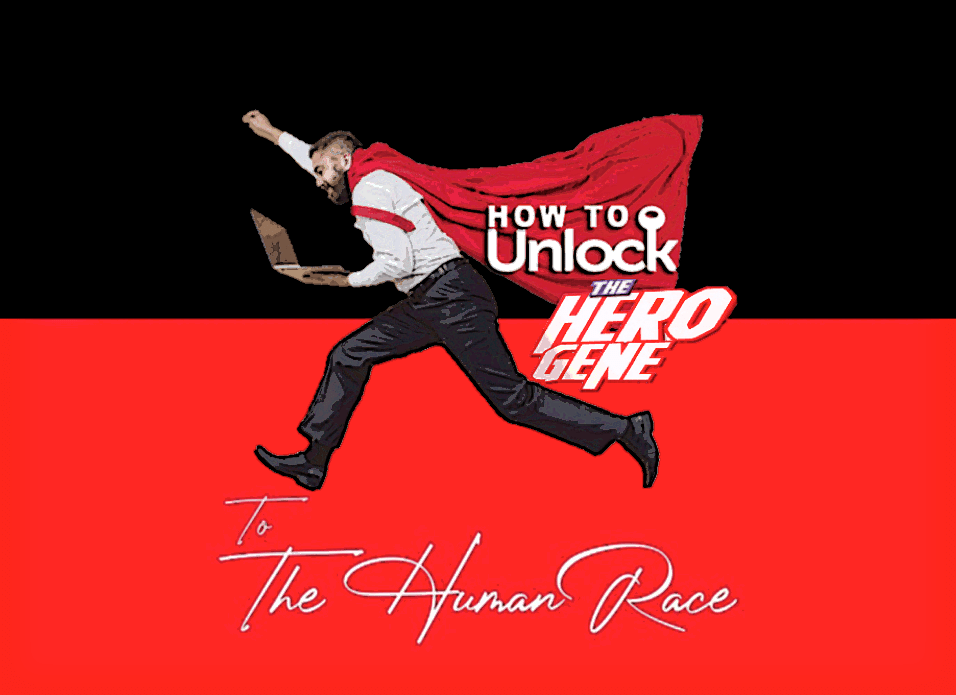
HOW TO UNLOCK THE HERO GENE INSIDE GENERATION Z & ALPHA
What makes a person heroic? Is there a hero gene, naturally giving someone the characteristics of a hero? According to one study, the answer might rest in the type of heroism we are addressing, such as the one we’ve discovered in 32 year old public servant, newly elected NAACP President of the Pasadena/Altadena Branch, Brandon Lamar.
In a paper published in 2010, researchers reported that people who engaged in one-time acts of bravery (like rushing into a burning building or rescuing someone from the path of an oncoming train) are not necessarily that much different from control groups of non-heroes.
By contrast, people who engage in lifelong heroism (such as professional nurses who regularly comfort the sick and dying) do share a number of important personality traits such as empathy, nurturance, and a need to live by a moral code. In this post we’re going to examine one such human, Brandon Lamar as he sat down with Dakar Apprentice, Wykin Harris.
Not everyone can become e a Super-Hero, yet the myth that Heroes are made and not born is my reason for writing this post. In my humble opinion every child is born with the innate sense to be selfless and a servant for goodness.
We believe it has to start with the parents, and their home environment, supported with consistent exposure to stories, images, and examples of how to prepare them for the moment in time that they can decide how to jump-in head-first when no one else will. We hope this posts inspires more adults to make the extra effort to give your hungry learners our in-development, Hero Starter Kit.
The radical entry of heroism research into scientific inquiry presents interesting challenges and possibilities for the study of heroism and the human condition more broadly. This ‘final frontier’ of the enduring phenomenon of heroism stands to offer remarkable, unprecedented, and controversial advances in our understanding of heroic and human behavior. Is a genetic basis for heroism a real possibility?
If so, what would its impacts be? Advances in genomics and increased interest in the fields of epigenetics and neuroplasticity might hold the key to its discovery. This article considers some of the leading emerging research in global health genomics and speculations in the scientific study of heroism, and its potential interrelationship with genetic and epigenetic well-being.
Renewed interest in the study of heroism over the past decade is advancing our understanding of this elusive optimal human behavior at a rapid pace. The question of a „hero gene‟, ever, still remains the elephant in the room; the idea that good and evil could be in some way genetic in basis, leading to pre-determined actions written into our very make-up is still met with great skepticism. Researchers have tried to move away from deterministic and gene-centric notions of humanity with the advent of fields that are dedicated to understanding human behavior from a number of perspectives (gender, culture, ecologies, socioeconomic status, spiritual, education, etc.
The role the environment plays and one‟s reaction to it is emerging as a key determinant in shaping one‟s identity and sense of self with the rise of cutting-edge scientific discourses such as neuroplasticity and epigenetics. These issues have been receiving considerable media and popular attention in documentaries such as Ghost in Your Genes, The Brain that Changes Itself (2010), and such websites asLumosity.com which is designed to train any person‟s brain to enhance functionality.
From Science Fiction to the Hard Science of Heroism. The idea of a hero or superhero gene, and that DNA can be manipulated to produce human beings with extraordinary powers, has been the preoccupation of various science fiction story arcs such as Heroes, Spiderman, The Incredible Hulk and Beauty and the Beast. Metamorphic change pervades the natural world, from the changing of the seasons to biological growth and decay. The universe itself is subject to immense transformation on both a microscopic scale as well as a trans-universal scale.
- Within the social sciences, there has been a resurgence of interest in researching heroism and heroic action, and there is now a discreet area of study known as heroism science. A major driver for this work has been the awareness and concern of the increasingly turbulent world in which bullying, terrorism, bystander apathy (where one sees something happening that requires intervention but does nothing), and inhumane actions appear to be rife.
- One reason that physical-risk heroes intervene when others do not may be due to individual differences in altruism controversially, because they are less concerned with the social implications of their actions, which is one facet of psychopathy. In a novel and thought-provoking line of trans-disciplinary research, considers whether there is a biological basis for heroism. Situational factors and group-level influences on heroic behavior, including those predicted by the social identity approach, have not yet been researched.
- This elusive optimal human behavior at a rapid pace. The question of a hero gene‟, ever, still remains the elephant in the room; the idea that good and evil could be in some way genetic in basis, leading to pre-determined actions written into our very make-up is still met with great skepticism. Researchers have tried to move away from deterministic and gene-centric notions of humanity with the advent of fields that are dedicated to understanding human behavior from a number of perspectives (gender, culture, ecologies, socioeconomic status, spiritual, education, etc. The role the environment plays and one‟s reaction to it is emerging as a key determinant in shaping one‟s identity and sense of self with the rise of cutting-edge scientific discourses such as neuroplasticity and epigenetics.
These issues have been receiving considerable media and popular attention in documentaries such as Ghost in Your Genes (2007), The Brain that Changes Itself (2010), and such websites as Lumosity.com which is designed to train any person‟s brain to enhance functionality. From Science Fiction to the Hard Science of Heroism The idea of a hero or superhero gene, and that DNA can be manipulated to produce human beings with extraordinary powers, has been the preoccupation of various science fiction story arcs such as Heroes, Spiderman, The Incredible Hulk and Beauty and the Beast.
 Site Title
Leave a comment