ATSC standards. TSC “Broadcast-to-Everything” Candidate Standard Marks Major Step Toward a More Connected Future.
ATSC, The Broadcast Standards Association®, announced an important milestone in the development of Broadcast-to-Everything (B2X), with the approval of a new Candidate Standard that establishes a critical foundation for the emerging B2X platform.
The Candidate Standard represents much more than a new technical specification. It is an important first step toward ATSC’s vision of enabling broadcast and mobile technologies to work more closely together — potentially extending the reach and efficiency of broadcast to a much broader range of connected devices, networks and services, while creating a more efficient means for unicast networks to take advantage of one-to-many network architecture.

Approved by ATSC Technology Group 3 (TG3) for public review, S44-2-002r6, “B2X System Discovery and Signaling,” provides one of the essential building blocks needed for devices to find and connect with future B2X services. B2X is intended to combine the strengths of broadcast with the enormous scale of the mobile ecosystem. The initiative could create new opportunities for broadcasters, wireless providers, device manufacturers, technology companies and service developers while opening new markets for broadcast-based services.
“ATSC is committed to advancing broadcast technologies that meet the evolving needs of our industry and create new opportunities for broadcasters, technology companies and consumers,” said Madeleine Noland, President of ATSC. “The progress on B2X is a strong example of that commitment. By bringing together expertise from across the broadcast and mobile ecosystems, ATSC is helping define how broadcast can evolve, and work alongside other networks as an essential part of the communications landscape.”

Extending the Power of Broadcast
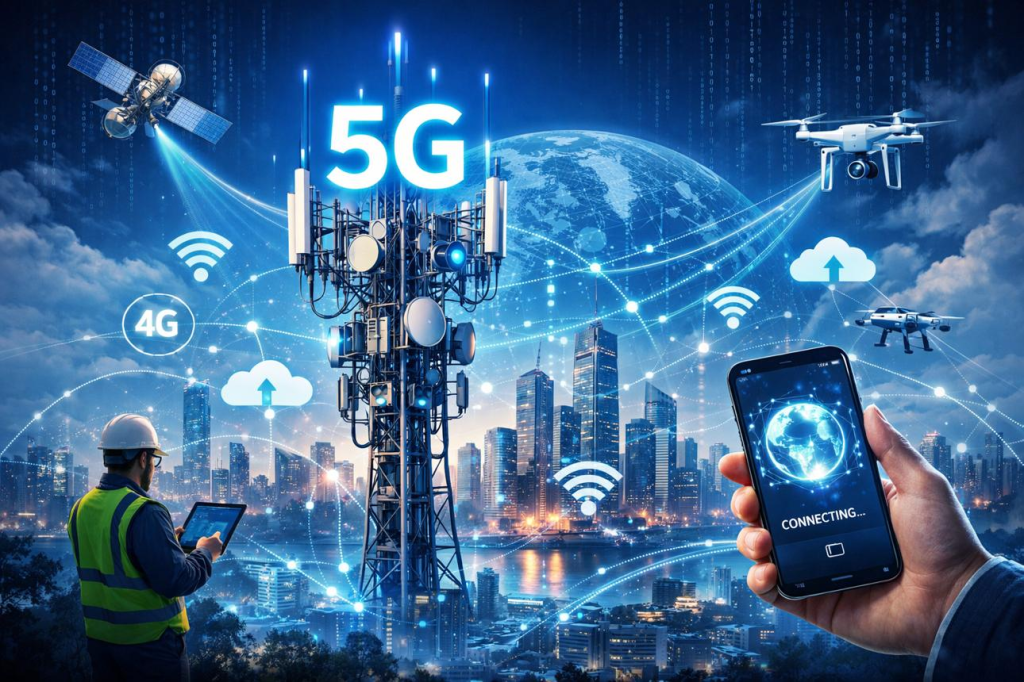
Broadcast has a unique advantage: it can efficiently deliver the same information or content to very large numbers of receivers at the same time. B2X is exploring how that capability can complement mobile broadband networks and reach a much wider universe of connected devices. Over time, that could mean opportunities extending well beyond traditional television receivers to mobile and connected devices.
“B2X can bring together broadcast efficiency in the mobile ecosystem, create new business opportunities, and ultimately extend advanced services to a broader range of devices, including very low-power devices such as wearables or remote sensors,” said Joe Fabiano, CTO of EdgeBeam Wireless and Chair of the TG3 Specialist Group on B2X.
The potential significance is substantial. As the number and variety of connected devices continue to grow, networks will need increasingly efficient ways to distribute information and high-demand content at scale. B2X is being developed to explore how broadcast can become part of that broader communications environment, complementing other networks rather than operating separately from them.
An Important First Building Block
The new Candidate Standard addresses a fundamental requirement for B2X: providing a common way for compatible devices to discover and access a B2X transmission.
Rather than changing existing ATSC 3.0 standards, the specification establishes an independent mechanism specifically designed for B2X. It is envisioned as the first building block in a broader suite of standards that ATSC expects will ultimately define a complete B2X platform.
Candidate Standard Opens the Door to Industry Participation
Candidate Standard status is an important step in ATSC’s standards-development process because it moves B2X from internal development toward broader industry evaluation and implementation experience.
The designation gives companies and organizations across the broadcast, wireless, semiconductor, device and communications industries – ATSC members and non-members alike – an opportunity to review the specification, evaluate its implementation and provide feedback that can help shape the future B2X platform.
ATSC welcomes broad industry participation as this work advances. The Candidate Standard review period closes at the end of June 2027.
About ATSC
ATSC, The Broadcast Standards Association, is defining the future of broadcast around the world with the Internet Protocol-based ATSC 3.0 next-generation standard. ATSC is an international, non-profit organization developing voluntary multimedia standards. ATSC member organizations represent the broadcast, professional services and equipment, motion picture, consumer technology, computer, cable, satellite, and semiconductor industries. For more information, please visit.
Broadcast-to-Everything: ATSC Sets the Stage for the Next Revolution in Connected Media
From NextGen Television to Mobile Devices, AI-Powered Journalism, and the Road to LA28 — A New Broadcast Standard Could Transform How the World Connects.
The future of broadcasting may no longer be defined by the television screen. It could be defined by everything connected to it.
In a major development for the global communications industry, ATSC, The Broadcast Standards Association announced on October 8, 2026, a new milestone in its emerging Broadcast-to-Everything (B2X) platform.
The announcement signals a potential transformation in how content, information, and digital services reach billions of connected devices.
For broadcasters, wireless carriers, streaming platforms, technology manufacturers, and the next generation of media professionals, B2X represents an important opportunity to reimagine broadcasting as a vital component of a connected global communications ecosystem.
ATSC : NextGen TV
A New Standard for a Connected World
At the center of ATSC’s announcement is its newly approved Candidate Standard, A/391: B2X System Discovery and Signaling, developed through ATSC Technology Group 3 (TG3).
The standard addresses a fundamental challenge: How can a device recognize and access a future B2X broadcast transmission?
The technical solution begins with a discovery mechanism known as a bootstrap signal, which allows compatible receivers to identify the transmission and determine how to access its services.
Importantly, B2X is being developed independently of existing ATSC 3.0 standards rather than replacing them.
This first Candidate Standard establishes a technical foundation, not a completed commercial B2X network. Additional specifications, device support, infrastructure investments, and industry adoption will be necessary.
Why Broadcast-to-Everything Matters
Traditional cellular networks generally deliver content through individual connections. When millions of consumers request the same content simultaneously, network demand can increase dramatically.
Broadcasting offers a different advantage: one transmission can serve many receivers.
B2X explores how that efficiency can operate alongside mobile networks, potentially creating new opportunities for:
- Connected television and streaming: More efficient delivery of popular programming and shared content.
- Mobile devices: Complementary broadcast-based distribution of information and digital services.
- Wearables and connected sensors: Potential services designed for low-power receivers.
- Public safety: Future opportunities for scalable distribution of critical information.
- Large-scale live events: Potential broadcast delivery models supporting major audiences and connected venues.
These are prospective applications, not services guaranteed by the newly approved Candidate Standard.
The Road to LA28: Broadcasting Meets the Connected Consumer

As Los Angeles prepares to host the 2028 Olympic and Paralympic Games, the intersection of connected television, mobile connectivity, satellite communications, and emerging broadcast standards deserves attention.
Millions of viewers will expect information and entertainment to move seamlessly among their living rooms, smartphones, connected vehicles, and public spaces.
ATSC’s B2X initiative could ultimately contribute to this evolving distribution environment, although its deployment by LA28 or any specific Olympic broadcaster has not been established.
The strategic question is no longer simply who owns the content. It is who develops the standards, operates the infrastructure, and prepares the workforce capable of delivering connected media at scale.
Dakar Foundation: Preparing the Workforce Behind Tomorrow’s Broadcast Systems
For the Dakar Foundation for the Performing Arts, the evolution of ATSC standards creates an important educational and workforce-development opportunity.
Through Dakar’s pre-apprenticeship initiatives, the emerging Hive Broadcast Consortium, and the SIGGRAPH Scoops Backpack Journalism project, the Foundation is building pathways that connect students and aspiring media professionals to production, technology, and emerging digital workflows.
The opportunity extends beyond cameras and traditional editing suites.
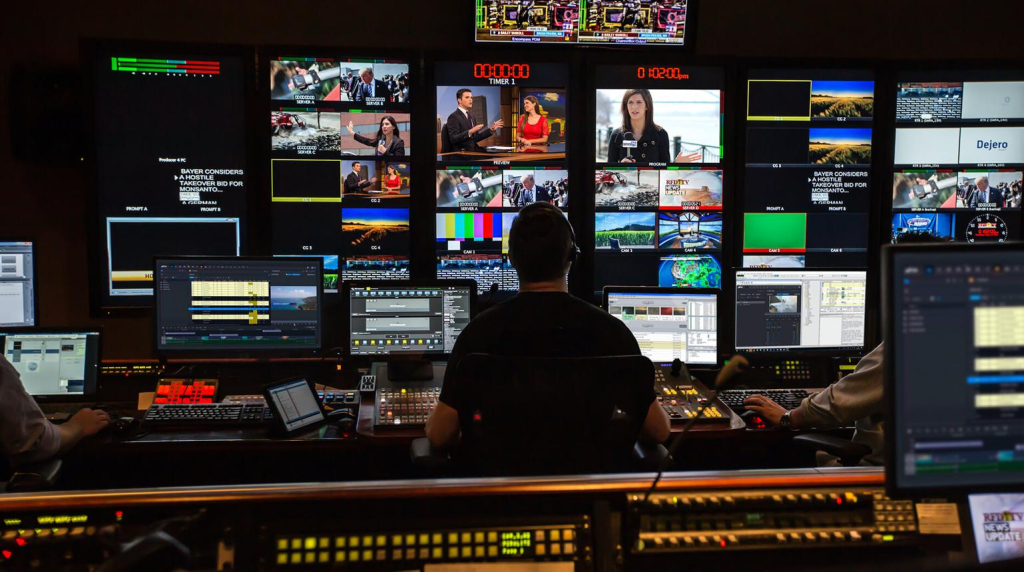
Tomorrow’s media workforce will increasingly need to understand how content travels across interconnected systems — from production and encoding to cloud distribution, broadcast transmission, connected devices, and audience engagement.
Dakar’s proposed B2X-focused workforce initiative would explore instruction and industry demonstrations involving broadcast standards, AI-assisted production, network technologies, live event distribution, and technical journalism.
This is a proposed educational direction, not an announcement of a formal ATSC partnership.
BrownBagTV: Student Voices Inside the Technology Revolution
The Dakar ecosystem also includes BrownBagTV, whose archive of iHeartRadio podcasts, video trailers, student-produced Instagram stories, and Gatekeepers interviews offers a foundation for expanding industry-focused journalism.
Through SIGGRAPH Scoops and Dakar’s Backpack Journalism pre-apprenticeship, students can be positioned to explore and report on the technologies transforming media and entertainment.
The mission is straightforward: give emerging storytellers the technical literacy, industry access, and reporting experience to explain complex innovations to their own generation.
Students should not simply consume the next broadcasting revolution. They should be trained to document it, help implement it, and participate in the workforce that supports it.
Explore the existing BrownBagTV archives and related features:BrownBagTV — Student Media and Podcast ArchiveARCJITYPE — BrownBagTV Feature
An Open Door for Industry Participation
One of the most important aspects of the ATSC announcement is that the Candidate Standard is available for broader industry evaluation.
ATSC is inviting participation from broadcast organizations, wireless companies, semiconductor manufacturers, device developers, and other technology stakeholders.
The review period extends through June 30, 2027, providing an opportunity to evaluate implementation and contribute feedback before the broader B2X platform is fully developed.
For education and workforce organizations, this creates an opportunity to begin building technical awareness and industry relationships while the technology is still evolving.
The Next Generation of Broadcasting Needs the Next Generation of Talent
Broadcast-to-Everything represents more than a possible new distribution platform.
It raises fundamental questions about the convergence of broadcasting, wireless communications, artificial intelligence, and the future of digital media employment.
As ATSC advances its B2X standards, the Dakar Foundation sees an opportunity to align education, apprenticeships, student journalism, and industry engagement with the emerging communications ecosystem.
The objective is not merely to predict the future of broadcasting. It’s to help prepare the human talent that will build, operate, explain, and sustain it.
The screen may change. The network may evolve. The standards will continue to develop. But the need for skilled, creative, technically capable people will remain essential. The future of broadcasting is not just television. It is everything.
ABOUT THE INITIATIVE
The Dakar Foundation’s Hive Broadcast Consortium and SIGGRAPH Scoops Backpack Journalism initiative envision a connection between next-generation media technology, industry mentorship, student-produced journalism, and pre-apprenticeship training.
Learn more: Dakar Foundation | Dakar Pathway | ATSC
Original ATSC announcement: Broadcast-to-Everything Candidate Standard — October 8, 2026
Technical reference: ATSC Candidate Standard: B2X System Discovery and Signaling (PDF)
Suggested SEO keywords: ATSC 3.0, ATSC A/391, Broadcast-to-Everything, B2X, NextGen TV, Connected Television, Mobile Broadcasting, Broadcast Standards, LA28, Dakar Foundation, SIGGRAPH Scoops, Backpack Journalism, AI Workforce Development.
Man you truncate it
Dakar Foundation: Building the Workforce and Entrepreneurs of Tomorrow
For the Dakar Foundation for the Performing Arts, ATSC’s milestone reinforces an opportunity to integrate technical workforce preparation with creator entrepreneurship and startup development.
Through the emerging Hive Broadcast Consortium, SIGGRAPH Scoops Backpack Journalism, and Dakar’s registered apprenticeship and pre-apprenticeship ecosystem, the Foundation envisions pathways connecting students, creators, technologists, and aspiring business founders with the next generation of broadcast innovation.
Tomorrow’s workforce must move beyond traditional production skills to understand AI-assisted workflows, IP broadcasting, cloud infrastructure, digital distribution, intellectual property, and business development.
The objective is to prepare participants not only for employment, but also for business ownership, startup formation, independent content distribution, and long-term wealth creation.
From Creator to Founder: The Startup Economy

The future media workforce will increasingly include creator-founders who develop intellectual property, launch production companies, build AI-powered applications, and commercialize new services.
Dakar’s proposed Creator Startup and Entrepreneurship Pathway would bridge media arts, emerging technology, technical apprenticeships, and business incubation — helping participants move from classroom projects to commercially viable ventures.
Programs such as Google for Startups provide useful models. Google’s startup ecosystem offers founder education, accelerator opportunities, technical guidance, and access to resources supporting innovation and company growth.
Google for Startups
Likewise, Google Workspace Enterprise demonstrates how secure collaboration, cloud productivity, and integrated AI tools can support teams building and scaling organizations.
Google Workspace with Gemini
These resources illustrate potential collaboration models for Dakar’s entrepreneurship pathway; they do not imply an existing formal partnership with Google.
A Creator Startup pipeline could connect five essential stages:
01
Discover
02
Train
03
Build
04
Launch
05
Scale
A proposed workforce-to-entrepreneurship pipeline: industry discovery, apprenticeship training, prototype development, startup launch, and business growth.
This approach offers a model for transforming creative talent into economic opportunity — supporting freelancers, independent studios, AI startups, and emerging technology enterprises.
BrownBagTV: Student Journalism Meets Broadcast Innovation
Dakar’s BrownBagTV platform provides another connection to this expanding ecosystem.
Through archived iHeartRadio podcasts, student-produced video trailers, social media features, and Gatekeepers industry interviews, BrownBagTV has helped introduce young storytellers to entertainment and technology professionals.
Combined with SIGGRAPH Scoops and Backpack Journalism, this infrastructure could evolve into a creator-development environment where students produce original content, build audiences, develop intellectual property, and explore startup opportunities.
Students should not simply consume the next broadcast revolution. They should be equipped to document it, operate it, own businesses within it, and participate in the economic opportunities it creates.
An Open Invitation to Industry
ATSC’s B2X Candidate Standard remains open for industry review through June 2027, creating opportunities for broadcasters, wireless providers, technology developers, educators, and workforce organizations to engage with the emerging specification.
For Dakar, this moment presents an opportunity to bring together broadcast standards, entrepreneurship, corporate innovation resources, apprenticeship pathways, and education.
Potential collaborators include technology companies, startup accelerators, cloud providers, investors, community colleges, media organizations, and employers seeking new talent and innovation.
The Future of Broadcasting Needs Creators, Founders, and Innovators
ATSC’s Broadcast-to-Everything initiative represents more than a new technical specification.
It signals a potential transformation in how broadcasting, wireless connectivity, AI, and digital commerce converge.
For Dakar Foundation, the mission extends beyond preparing people for tomorrow’s jobs. It is about preparing them to create the companies, own the intellectual property, and lead the industries of tomorrow.
The future of broadcasting is not just Broadcast-to-Everything. It is Opportunity-for-Everyone — from workforce development to entrepreneurship and ownership.
Explore the Standards and Startup Ecosystem
ATSC — Broadcast Standards Association | ATSC B2X Candidate Standard (PDF)


Leave a Reply